Sleep, design, and the city
Vispring Mattress Construction: A Closer Look at Support and Materials
A mattress can seem like a single, agreeable surface. In reality, it is a small architecture: springs, upholstery, ticking, and the foundation beneath it, each influencing the experience of rest. Looking closely at how Vispring mattresses are constructed offers a useful way to understand what “support” means in a handcrafted bed—and why material choices matter long after the first impression.
Published November 4, 2026
In a hotel room, the bed is often the first thing one notices and the last thing one remembers. It waits in the middle of the room with a certain architectural confidence, dressed in clean linen and flanked by lamps that suggest a life less hurried than the one outside the window. Yet the part that determines whether the night is genuinely restful is mostly concealed. Beneath the smooth surface lies a system of materials and decisions—some springy, some yielding, some intended to steady the body—that cannot be judged by appearance alone.
Vispring is a useful lens through which to examine that hidden system. The company is associated with handcrafted, pocket-sprung mattresses and natural upholstery materials, but no single description should be mistaken for a specification shared by every model. Mattress construction varies by design. The useful questions are more general: What supports the body? How does the comfort layer soften that support? How do the materials respond to warmth and moisture? And does the mattress work with the foundation beneath it?
These questions are relevant whether one is considering a Vispring mattress for a New York apartment, a guest room, or a hotel-inspired bedroom at home. Luxury is not simply a matter of softness, nor is craftsmanship a synonym for good fit. A thoughtful comparison begins with the internal construction, then returns to the sleeper: posture, preferred firmness, movement, room climate, and the practicalities of care.
The mattress as a layered structure
A mattress is often described in terms of its topmost sensation: plush, firm, cloud-like, supportive. Those words can be evocative, but they flatten a more complicated object into a single adjective. A mattress is better understood as a sequence of layers. At the bottom is a spring system or other support core; above it are upholstery and comfort materials; around the whole assembly is a cover, or ticking. Each layer has a different task, and the experience emerges from their interaction.
The support core provides the underlying resistance that keeps the sleeper from sinking too far. Upholstery layers change how quickly that resistance is felt and how pressure is distributed at the shoulders, hips, and other contact points. The cover protects the interior and can affect the first touch of the surface. A substantial comfort layer may make a mattress feel more yielding without changing the basic structure beneath it. Conversely, a firm-feeling surface can still have a spring system designed to respond differently under different parts of the body.
This layered view helps clarify why firmness and support are not interchangeable terms. Firmness is the impression of how hard or soft a mattress feels when one lies down. Support refers to how effectively the mattress holds the body in a comfortable, stable position. A mattress may feel quite soft at the surface yet provide substantial support underneath; another may feel firm without being an ideal match for a particular sleeper. Neither sensation, by itself, tells the whole story.
Pocket springs and responsive support
Pocket springs are individual coils enclosed in fabric pockets, rather than a single interconnected network of springs. This construction allows coils to respond with some independence. When pressure is applied to one area, the movement need not travel as directly across the entire mattress as it might in a more tightly linked system. The result can be a more localized response, though the exact feel depends on the design, the number and arrangement of springs, and the layers above them.
In a handcrafted mattress, spring choice is one element of a larger composition, not a shortcut to a guaranteed result. Coil tension, dimensions, zoning, and the way the spring unit is assembled all influence how the bed behaves. The same spring system can feel quite different beneath different upholstery. For this reason, specifications should be read as clues rather than a substitute for trying the mattress, where that is possible.
A couple may be particularly interested in how the bed responds to movement. Independent spring action can help limit the sensation of movement spreading from one side to another, but motion transfer depends on the whole mattress, not springs alone. Upholstery, frame stability, and the sleeper’s own sensitivity all play a part. A showroom test should include more than a brief sit on the edge: lie in the usual sleeping position, turn over, and notice whether the mattress settles quickly or continues to move.
Natural materials and the character of the surface
The upholstery in a premium mattress may include natural fibers such as wool, cotton, or, in some designs, other animal or plant fibers. Their purpose is not merely to decorate a specification sheet. Different fibers can contribute cushioning, resilience, insulation, and the management of moisture and heat. Their effect depends on their quality, quantity, arrangement, and combination with the other components.
Wool, for example, can add a springy, cushioned quality and help buffer changes in warmth. Cotton is often valued for its familiar, breathable hand. Other materials may offer a particular degree of loft, firmness, or resilience. It is tempting to treat “natural” as a synonym for superior, but the label alone does not predict comfort, durability, or suitability. A well-made mattress is a matter of design and execution as much as of ingredients.
There is also a sensory difference between a material’s reputation and its actual feel. A fiber that sounds appealing in a description may not suit someone who sleeps warm, prefers a very responsive surface, or needs a firmer sensation at the shoulder. Ask what materials appear in the specific model under consideration and where they sit in the construction. Ask how the upholstery contributes to the surface feel, and whether the mattress is designed to be used on one side or turned. Answers should be model-specific; broad claims about an entire range are less useful than a clear account of the bed in front of you.
Firmness, pressure relief, and sleeping position
Sleeping position offers a practical starting point when comparing luxury mattresses. Side sleepers often need enough give at the shoulder and hip to reduce concentrated pressure, while still maintaining a comfortable line through the torso. Back sleepers may prefer a surface that cushions the body without allowing the hips to sink excessively. Stomach sleepers commonly look for a firmer, more level feel, though individual comfort varies. These are tendencies, not rules. Body shape, mobility, and personal preference make every comparison more particular.
Pressure relief describes how the surface accommodates the body at its contact points. It is not the same as softness. A mattress that yields slightly where the body presses can distribute pressure more comfortably, while its deeper structure continues to resist excessive sinking. A mattress that is too firm for a sleeper may leave shoulders or hips feeling compressed; one that is too yielding may make it difficult to feel stable. The desired balance is individual and should be assessed over more than a few seconds.
When testing a mattress, use the pillow and position you normally sleep with if possible. Give the body time to settle, then consider whether the spine feels comfortably aligned and whether any area bears too much pressure. A showroom cannot reproduce a full night, but a deliberate test is more revealing than pressing a hand into the quilted top. If a mattress is being chosen for a couple, both sleepers should test it, since a shared bed must accommodate two sets of preferences and proportions.
Climate, breathability, and the hotel-room question
New York bedrooms have their own range of sleeping climates. A sunlit apartment on a warm upper floor behaves differently from a cool, shaded room; seasonal heating and air-conditioning add further variables. The mattress is one part of that environment, alongside sheets, duvet, room temperature, and the sleeper’s own tendency to feel warm or cold.
Mattress materials can influence how heat and moisture are experienced, but no component works in isolation. A breathable upholstery layer cannot compensate for every room condition, and a naturally insulating fiber may feel pleasant in one climate and too warm in another. The sheets matter, too: a crisp cotton percale can feel quite different from a smoother sateen, even when both cover the same mattress. The duvet’s warmth, the mattress protector, and ventilation around the bed also affect comfort.
This is one reason hotel beds can feel so distinctive. The experience is not produced by the mattress alone, but by a coordinated combination of foundation, mattress, protector, sheets, pillows, duvet, and room conditions. A luxury sleep environment is often a system of restrained choices: bedding that feels comfortable against the skin, a pillow suited to the sleeper, and a bed frame that keeps the mattress level and stable. Recreating that atmosphere at home begins by noticing which part of the hotel experience one actually remembers.
The foundation beneath the mattress
A mattress should be considered together with its base. The foundation supports the mattress and can affect its stability, ventilation, and long-term performance. Compatibility matters: follow the mattress maker’s requirements for the type of base, spacing between slats, and any other support conditions. A frame that looks elegant but does not provide appropriate support can undermine the performance of even a carefully constructed mattress.
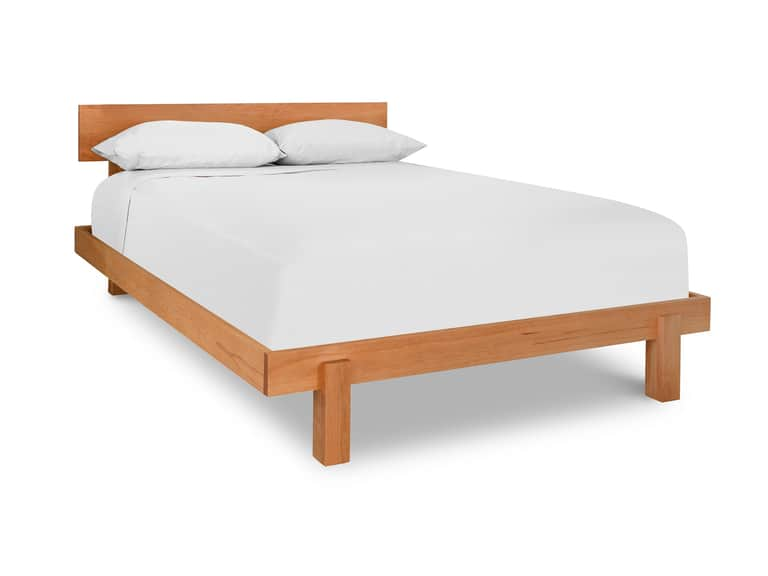
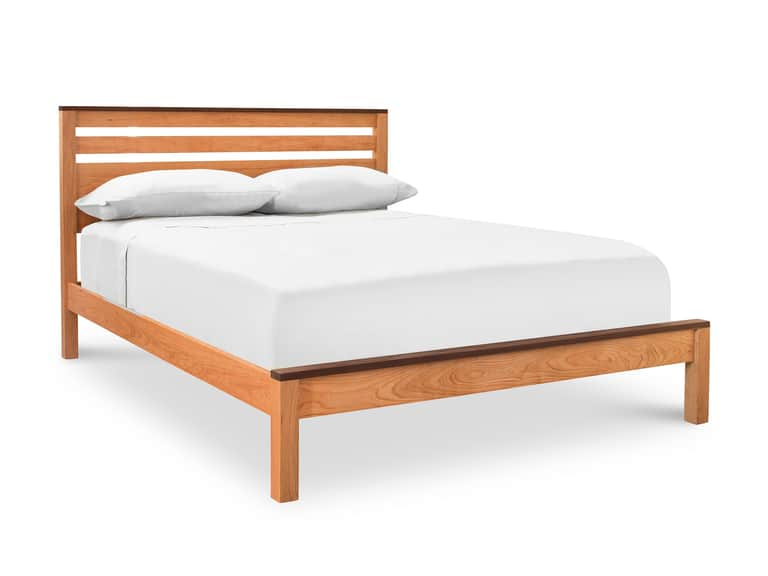
Platform beds bring the foundation into the visual design of the room. A solid-wood platform such as the Skyline Panel Bed offers a clear example of a bed frame with an integrated platform foundation. Its structure and the mattress’s requirements should still be checked together before use; the frame is not a substitute for confirming the support specifications of a particular mattress. In a compact city bedroom, this relationship between furniture and sleep surface is especially practical. The frame sets the bed’s height and presence, while the mattress determines how the body is held.
There is an aesthetic consequence as well. A platform bed can give a room a composed, low-profile appearance, while a taller frame changes the proportions of the space. Neither is inherently more luxurious. The right choice depends on the room, ease of getting in and out of bed, and compatibility with the mattress. The quiet visual order of a well-made bed is most convincing when its underlying structure is equally considered.
A mattress pad is not a mattress
A mattress pad can add a modest layer of cushioning and help protect the mattress, but it should not be expected to transform the basic feel of a bed. A thick topper or pad may soften the first impression; it cannot replace a support core that is unsuitable for the sleeper. Before adding a layer, consider whether the issue is surface comfort, temperature, protection, or a mismatch in support. The remedy depends on the problem.
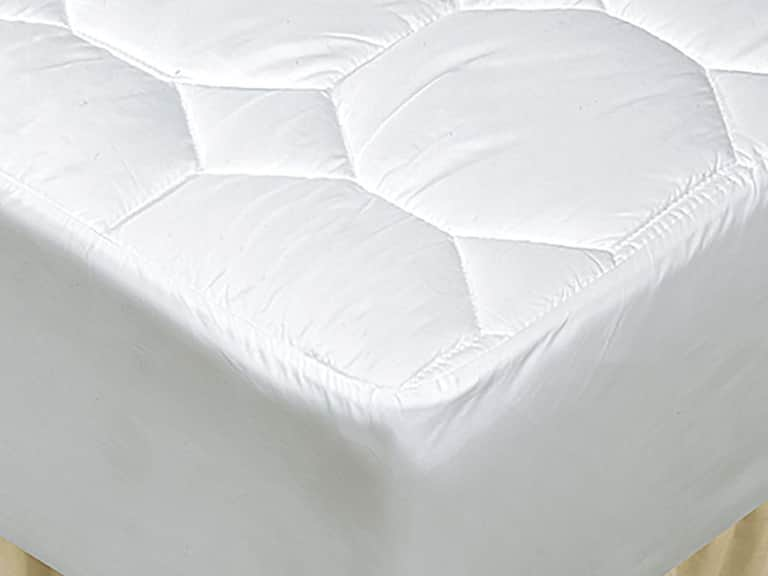
For a breathable, lightly cushioned layer, the DownTown Company Luxury Cotton Mattress Pad uses cotton fill and a honeycomb-quilted cover, with deep pockets intended to fit securely over the mattress. It is a washable accessory, not a feature of Vispring construction, and its effect will be distinct from the mattress itself. That distinction matters when evaluating a bed: compare the mattress on its own, then consider how a protector, pad, or topper changes the experience.
What to ask when comparing Vispring mattresses
A useful consultation is less about collecting impressive-sounding terms than establishing what they mean in the model being considered. Ask for a breakdown of the spring system and upholstery; whether the mattress has a single or multiple spring layers; what materials are used; and how the maker describes the intended feel. Ask whether the mattress is one-sided or designed to be turned, and what rotation or care is recommended. Answers can vary across models, so a general brand description is not enough.
- What is the construction of this particular model, from the support core to the cover?
- Which materials provide the surface cushioning, and how might they affect warmth and responsiveness?
- What firmness options are available, and how does the retailer distinguish firmness from support?
- What foundation does the mattress require, and are there limits on slat spacing or support type?
- What are the care instructions, including turning or rotating, if applicable?
- What do the warranty terms cover, and what conditions must be met for them to apply?
It is also sensible to ask about delivery access, especially in an older New York building where stairwells and elevators can narrow the path from curb to bedroom. A mattress is a large object with inconvenient geometry. Its suitability is not purely a question of comfort; it must also be deliverable, correctly supported, and maintainable in the space where it will be used.
Handcraft and the meaning of quality
The phrase “handcrafted mattress” carries a particular promise: that skilled assembly and close attention to materials distinguish the bed from a product made only to a uniform industrial formula. The promise is meaningful when it is connected to specific construction details and consistent workmanship. It is less helpful when used as a decorative adjective, detached from what the maker actually does.
Quality, in practice, appears in several places at once: how the spring unit is assembled, how the upholstery is layered and secured, how the cover is finished, and how well the mattress performs under ordinary use. A carefully made mattress can still be the wrong mattress for a particular sleeper. Craftsmanship concerns how an object is made; comfort concerns how that object works for a person. The two should meet, but neither guarantees the other.
Longevity also depends on conditions outside the workshop. A compatible foundation, suitable care, and a stable sleeping environment all help a mattress perform as intended. Heavy layers added without consideration may alter the surface; an unsuitable base may compromise support; and neglecting the maker’s care guidance can shorten useful life. The romance of a beautifully made object is best preserved by the ordinary attention it asks for.
The final comparison
When comparing luxury mattresses, it is easy to be led by a single sensation—the first softness, the reassuring weight of the bed, the pleasure of a hotel-like finish. Those impressions have their place, but they are only the beginning. Look beneath the quilting. Understand the spring system, the upholstery materials, and the relationship between comfort and support. Then consider how your sleeping position, preferred firmness, and room climate will shape the experience.
Vispring mattress construction invites precisely this kind of attention. Its pocket-spring and material choices are not abstractions; they are decisions that influence how a bed responds, cushions, and manages warmth. Yet the right choice is not the one with the longest specification or the most luxurious vocabulary. It is the mattress whose construction suits the sleeper, whose foundation is compatible, and whose feel remains comfortable after the novelty of the showroom has passed.
In a city where the bedroom may be a refuge from noise, weather, and the determined activity of the streets, the bed’s hidden architecture deserves a closer look. A refined sleep environment is not assembled from prestige alone. It comes from a series of well-matched parts: support that feels steady, materials that suit the climate, bedding that welcomes the skin, and a foundation built to hold the whole arrangement. The surface may be quiet. The thinking beneath it need not be.